Loading...
Join our Facebook Group: Join: Expats in Poland
Loading...
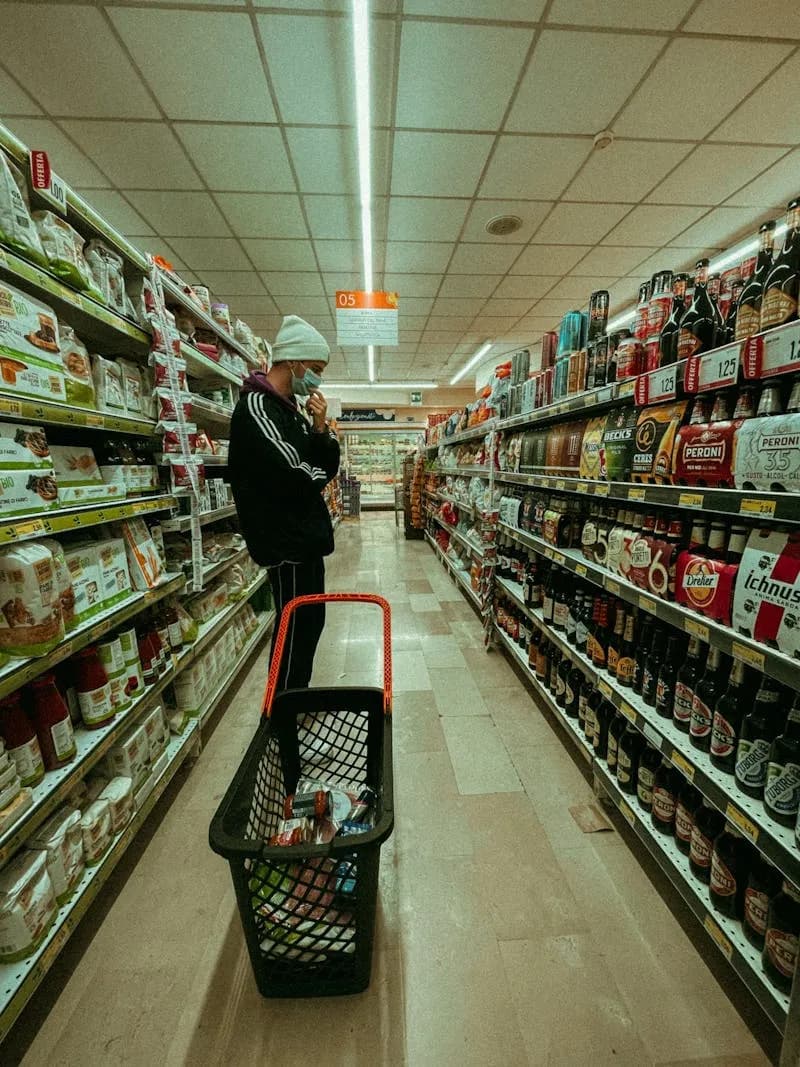
Poland's grocery market is dominated by discount chains offering good quality at low prices. Whether you're used to Whole Foods or Aldi, this guide covers where to shop, what things cost, and the quirks of Polish supermarket culture.
Poland has a diverse and competitive grocery market. Unlike some European countries where one or two chains dominate, Poland has half a dozen major players fighting for market share, which keeps prices low and quality rising. The market is led by discount chains (Biedronka and Lidl control roughly 40% of the market together), but there are good options at every price point.
| Chain | Price Level | Locations | Hours | Best For |
|---|---|---|---|---|
| Biedronka | Cheapest | 3,500+ | 6:00-23:00 | Budget shopping, Polish staples |
| Lidl | Low | 900+ | 6:00-22:00 | Quality + value, bakery, themed weeks |
| Zabka | Medium-High | 10,000+ | 6:00-23:00 (often Sundays) | Convenience, late hours, Sundays |
| Kaufland | Low-Medium | 250+ | 6:00-22:00 | Large selection, deli, bulk buying |
| Auchan | Medium | 70+ | 8:00-22:00 | Hypermarket, international products |
| Carrefour | Medium | 900+ (incl. Express) | 7:00-22:00 | Various formats, imported goods |
| Netto | Low | 400+ | 6:00-22:00 | Danish discount chain, good produce |
The undisputed king of Polish grocery shopping and the single most important retailer in the country. Owned by the Portuguese group Jeronimo Martins, Biedronka ("ladybug" in Polish) has over 3,500 stores nationwide - you'll find one within walking distance of almost any apartment in any Polish city or town. In some neighborhoods, there are two or three Biedronkas within a 10-minute walk.
Prices are the lowest of any chain, especially for Polish staples: bread, dairy products, meat, seasonal fruits and vegetables, eggs, and basic pantry items. The quality is decent for the price - not gourmet, but perfectly fine for everyday cooking. Biedronka's own-brand products (marked with the "Dada" brand for household items and various names for food) are significantly cheaper than name brands and often comparable in quality.
Don't expect a premium shopping experience. Biedronka stores are functional, not fancy - narrow aisles, cardboard displays, and a utilitarian aesthetic. But the prices are hard to beat, and the stores have improved significantly over the past few years, with many getting renovated interiors, better lighting, and wider product ranges. The "Moja Biedronka" loyalty app (available in Polish only, but navigable with Google Translate) gives additional discounts - sometimes 30-50% off specific items - and is genuinely worth downloading.
If you know Lidl from Germany or other European countries, it's the same concept in Poland: limited selection, own-brand focus, but noticeably higher quality than Biedronka. The in-store bakery is genuinely excellent - fresh bread, croissants, rolls, and pastries baked throughout the day, often at lower prices than standalone bakeries. The "middle aisle" (srodkowa polka) with random non-food specials (tools, clothes, kitchen equipment) is as addictive in Poland as it is everywhere else.
Lidl's biggest draw for expats is the themed weeks. Every week or two, Lidl runs a country-themed promotion - Italian Week (pasta, olive oil, mozzarella, wine), Greek Week (feta, olives, tzatziki), Asian Week (soy sauce, noodles, wok vegetables, spring rolls), American Week (peanut butter, BBQ sauce, pancake mix), and more. These promotions are popular and products sell out fast, especially the more exotic items. It's the best way to find international ingredients cheaply in smaller Polish cities where specialized shops don't exist.
The Lidl Plus app offers digital coupons, scratch cards with random discounts (occasionally you'll get 10-20% off your entire purchase), and a receipt scanner that accumulates savings for future visits. Prices are slightly higher than Biedronka - maybe 5-10% on average - but the quality difference, especially in fresh produce and bakery items, justifies the small premium for many shoppers.
Zabka ("little frog") is everywhere. With over 10,000 locations across Poland, it's the most ubiquitous shop in the country - more common than Starbucks in Manhattan. It's a convenience store, not a supermarket: small format (typically 50-80 sqm), limited selection focused on quick purchases, snacks, drinks, sandwiches, and essential groceries. Think 7-Eleven or Tesco Express.
Prices at Zabka are 20-40% higher than Biedronka for the same products, which makes it a terrible choice for weekly grocery shopping. But Zabka thrives on convenience: stores are open until 23:00 (some until midnight), they're located every few hundred meters in urban areas, and - crucially - most Zabka stores are open on Sundays. This last point is the key one: on non-trading Sundays when Biedronka, Lidl, and Kaufland are all closed, Zabka is your lifeline for milk, bread, eggs, and other essentials.
Zabka manages to stay open on Sundays by classifying its franchisees as postal service operators - each store has an InPost parcel machine or offers postal services through a partnership, which legally exempts them from the Sunday trading ban. It's a creative interpretation of the law that has survived legal challenges. Zabka also has a growing range of its own prepared meals (sandwiches, salads, hot dogs, and increasingly decent ready-to-eat options) that make it a quick lunch spot for office workers.
These are the large-format stores - supermarkets and hypermarkets with significantly bigger selections than the discounters. Kaufland (owned by the German Schwarz Group, same parent company as Lidl) is excellent for weekly one-stop shopping. Stores are large, well-organized, and have extensive deli counters with fresh meat, cold cuts, cheeses, prepared salads, and hot meals. Prices are competitive with Lidl, and the selection is much wider.
Auchan hypermarkets are the biggest stores on this list - some are massive, warehouse-like spaces with everything from groceries to electronics to clothing under one roof. They carry the widest range of international products among the supermarket chains, including dedicated sections for Asian, Middle Eastern, and American foods. This makes Auchan particularly useful for expats looking for specific ingredients from home.
Carrefour operates in multiple formats: full-size hypermarkets (Carrefour), mid-size supermarkets (Carrefour Market), and small convenience stores (Carrefour Express). The Express format is similar to Zabka but with a slightly better product range and lower prices. The larger Carrefour stores have a good selection of international and organic products. Carrefour's own-brand products offer good value across all categories.
These prices reflect typical supermarket prices at Biedronka and Lidl - the two cheapest chains. Zabka and premium stores will be 20-40% higher. Prices fluctuate seasonally (strawberries are 8 PLN/kg in June and 25 PLN/kg in January) and vary slightly by city (Warsaw is about 5-10% more expensive than smaller cities). All EUR and USD conversions are approximate.
| Item | Typical Price (PLN) | ~EUR | ~USD |
|---|---|---|---|
| Bread (fresh loaf, 500g) | 4-7 PLN | 0.90-1.60 | 1.00-1.70 |
| Milk (1 liter) | 3.50-5 PLN | 0.80-1.15 | 0.85-1.25 |
| Eggs (10 pack) | 8-14 PLN | 1.85-3.25 | 2.00-3.50 |
| Chicken breast (1 kg) | 18-28 PLN | 4.20-6.50 | 4.50-7.00 |
| Minced pork/beef (500g) | 12-18 PLN | 2.80-4.20 | 3.00-4.50 |
| Rice (1 kg) | 5-9 PLN | 1.15-2.10 | 1.25-2.25 |
| Pasta (500g) | 3-7 PLN | 0.70-1.60 | 0.75-1.75 |
| Butter (200g) | 7-10 PLN | 1.60-2.30 | 1.75-2.50 |
| Cheese (gouda, 1 kg) | 30-45 PLN | 7.00-10.50 | 7.50-11.25 |
| Apples (1 kg) | 3-6 PLN | 0.70-1.40 | 0.75-1.50 |
| Tomatoes (1 kg) | 6-14 PLN | 1.40-3.25 | 1.50-3.50 |
| Potatoes (1 kg) | 2-4 PLN | 0.45-0.90 | 0.50-1.00 |
| Beer (500ml, domestic) | 3.50-6 PLN | 0.80-1.40 | 0.85-1.50 |
| Wine (bottle, decent quality) | 20-40 PLN | 4.65-9.30 | 5.00-10.00 |
| Coffee (250g, ground) | 15-30 PLN | 3.50-7.00 | 3.75-7.50 |
| Water (1.5L bottle) | 1.50-3 PLN | 0.35-0.70 | 0.35-0.75 |
A single person cooking at home and shopping primarily at Biedronka or Lidl can eat well on 1,000-1,500 PLN per month. This includes meat, dairy, fresh produce, bread, and basic pantry staples - it's not a survival budget, it's a comfortable shopping basket. A couple should budget 1,500-2,500 PLN. These figures exclude eating out and alcohol beyond the occasional beer or wine.
If you buy organic products, imported specialty items, or shop primarily at Zabka or premium stores, expect to spend 30-50% more. Organic food is available but significantly more expensive than conventional - organic eggs might be 18-22 PLN per 10 instead of 8-12 PLN, and organic chicken can cost 40-60 PLN per kg instead of 18-28 PLN. For a broader cost breakdown including rent, transport, and utilities, try our cost of living calculator.
Good to know:Poland is one of the cheapest EU countries for groceries, alongside Romania, Bulgaria, and Hungary. Food prices are roughly 30-40% lower than in Germany, France, or the Netherlands, and about 50% lower than in Scandinavia or Switzerland. If you're coming from Western Europe or the US, the first supermarket visit will be a pleasant surprise. A full shopping cart that would cost 80-100 EUR in Germany might be 50-60 EUR in Poland.
This is probably the biggest practical adjustment for newcomers. Since 2018, most stores in Poland are closed on Sundays. The ban (officially called "Ustawa o ograniczeniu handlu w niedziele i swieta") was introduced to protect retail workers' right to a day off and was phased in gradually - initially only two Sundays per month were non-trading, then it expanded to nearly all Sundays by 2020.
The ban applies to most retail shops: supermarkets, clothing stores, electronics shops, furniture stores, and shopping malls. It doesn't just mean they close early - they don't open at all. If you arrive at Biedronka on a non-trading Sunday expecting to buy groceries, you'll find locked doors and dark windows.
Not all Sundays are non-trading. In 2026, there are 7 trading Sundays (niedziele handlowe) when all shops can open normally. These are typically scheduled before major holidays and long weekends:
On these 7 Sundays, everything opens as normal and you can shop as you would on any other day. The remaining ~45 Sundays are non-trading. Mark the trading dates in your calendar - they're announced annually by the government and widely publicized in Polish media. Most supermarket apps and websites also indicate upcoming trading Sundays.
Several categories of shops are exempt from the ban and stay open every Sunday:
Zabkais the big one. As mentioned above, Zabka classifies its franchisees as postal service operators through an InPost partnership, which legally exempts them from the trading ban. Most Zabka stores operate on Sundays with normal or slightly reduced hours. This makes Zabka the default destination for Sunday essentials - milk, bread, eggs, butter, toilet paper. You'll pay a premium (20-40% above Biedronka prices), but it beats going without.
Gas station shopsare another reliable option. Orlen (Poland's largest fuel company), BP, Shell, and Circle K all have mini-marts attached to their stations that are open 24/7 or with extended hours, including Sundays. The selection has improved significantly in recent years - you can find fresh bread, dairy, snacks, drinks, and basic cooking ingredients. Prices are higher than supermarkets but often better than Zabka, and the Orlen Stop Cafe chain even offers decent coffee and hot food.
Train station shops inside railway stations are exempt. Warsaw Centralna, Krakow Glowny, Wroclaw Glowny, and other major stations have small shops and supermarkets (Carrefour Express at many stations) that operate on Sundays. If you live near a main train station, this can be a useful Sunday shopping option.
Bakeries and confectioners where the owner works the counter are also exempt. Small neighborhood bakeries (piekarnie) often open on Sunday mornings for a few hours, selling fresh bread, rolls, and pastries. This is a charming Polish tradition and the bread is usually better than anything in a supermarket.
Practical advice: Do your weekly shopping on Saturday. This seems obvious, but it's easy to forget when you first arrive. Supermarkets on Saturday afternoons are very crowded because everyone is stocking up before the Sunday closure. Going Saturday morning (before 10:00) or Friday evening (after 19:00) is much more comfortable. Keep a mental list of Sunday-exempt shops near your home so you're not scrambling if you forget something.
Polish cuisine is hearty, meat-heavy, and deeply comforting - built around pork, potatoes, cabbage, dairy, and root vegetables, with flavors shaped by cold winters and agricultural tradition. It's not going to win any lightness awards, but in terms of satisfaction per bite, it punches well above its weight. Many traditional dishes are available in supermarkets as ready-to-heat or frozen options, making it easy to try them without learning to cook from scratch.
Poland's most famous dish, and for good reason. Pierogi are dumplings made from unleavened dough, filled with various combinations, boiled (and sometimes then pan-fried in butter), and served with sour cream or fried onions. The classic types you'll find everywhere: ruskie (with potato and twarog cheese - the most popular variety), z miesem (with seasoned meat filling), z kapusta i grzybami (with sauerkraut and forest mushrooms - traditional for Christmas Eve), and sweet varieties with truskawkami (strawberries) or jagodami (blueberries) in summer.
Supermarket pierogi come in two forms: frozen (5-12 PLN per pack of 400-500g, found in the freezer section) and fresh from the refrigerated section (6-15 PLN, usually near the dairy case). The fresh ones are noticeably better. For the real experience, visit a dedicated pierogi restaurant (pierogarnia) - most cities have several. A plate of 8-12 pierogi costs 20-35 PLN at a restaurant. It's worth trying at least once to taste the difference between handmade and mass-produced.
A sour rye soup that's uniquely and unmistakably Polish. The base is made from fermented rye flour (zakwas zurowy - a cloudy, tangy liquid you can buy in bottles at any supermarket), and it's served with slices of white sausage (biala kielbasa), hard-boiled egg, and sometimes potatoes. The sourness is gentle - think sourdough bread rather than vinegar. Some restaurants serve zurek inside a hollowed-out bread bowl (zurek w chlebku), which is both practical and theatrical.
If you want to try zurek at home, buy a jar of ready-made zurek (available at every supermarket, 8-15 PLN) and heat it up. It's not as good as restaurant-made, but it gives you a fair idea. Alternatively, buy a bottle of zakwas zurowy and make it from scratch - plenty of English recipes exist online, and the process is straightforward. Zurek is considered one of the essential Polish culinary experiences, and most expats who try it become fans.
The "hunter's stew" - a slow-cooked mix of sauerkraut, fresh cabbage, and various meats (typically sausage, pork, and sometimes game or dried mushrooms). It's hearty winter food that tastes better the day after it's made, because the flavors develop and meld as it sits. Some Polish families make bigos in large batches and reheat it over several days, claiming it peaks on day three.
Supermarket bigos comes in cans or jars (8-15 PLN) and is adequate but not impressive. Home-cooked or restaurant bigos is a different experience entirely. If you see it at a traditional Polish restaurant (restauracja), order it, especially in winter. It pairs perfectly with a slice of dark rye bread and a cold beer.
Oscypekis smoked sheep cheese from the Tatra Mountains (Podhale region), shaped into distinctive spindle-shaped blocks with decorative patterns pressed into the surface. It's hard, salty, and smoky - excellent grilled and served with cranberry sauce (oscypek z grilla z zurawina), which is a common street food in Zakopane and at markets across Poland. Supermarkets carry it year-round in the cheese section, though the best oscypek comes from mountain markets where it's made by local shepherds.
Kabanosyare thin, dried pork sausages - Poland's version of a snack sausage, and a staple in lunchboxes, hiking backpacks, and beer-drinking sessions across the country. They're air-dried, so they don't need refrigeration and last for weeks. Available in every supermarket, usually near the cold cuts section. Look for "kabanosy wieprzowe" or "kabanosy staropolskie" for a higher meat content and better flavor - the cheaper versions bulk up with fillers.
Twarog is a fresh white cheese similar to quark or farmer's cheese. It's used in salads, pierogi fillings, cheesecakes (sernik), and as a breakfast spread mixed with chives and radishes. Kielbasa (Polish sausage) comes in dozens of varieties - krakowska (dry, smoky), slaska (fresh, for grilling), and mysliwska (hunter's sausage, dark and spicy) are good starting points. Makowiec (poppy seed roll) is a traditional cake, especially popular at Christmas but available year-round in bakeries and supermarkets. Kompot is a cooked fruit drink made from seasonal fruits (cherries, plums, apples), served warm in winter and cold in summer. And kiszona kapusta (sauerkraut) is a staple ingredient - the best version comes from barrels at markets, but supermarket jars are fine for cooking.
If you're craving ingredients from home, Poland's international food scene has expanded enormously in recent years. Ten years ago, finding Thai fish sauce or Mexican chipotles in adobo was nearly impossible outside Warsaw. Today, Warsaw and Krakow have well-stocked international grocery stores, and even smaller cities have options.
Warsaw has the best Asian food shopping in Poland, largely thanks to a significant Vietnamese community that has been in the city since the 1970s. The Wola and Praga-Polnoc districts have numerous Asian grocery stores carrying fresh Asian vegetables (bok choy, morning glory, Thai basil, galangal), tofu in multiple varieties, every soy sauce and fish sauce you can imagine, rice noodles, dried mushrooms, curry pastes, coconut milk, frozen dim sum, and much more. Some stores also carry Korean and Japanese products (kimchi, miso paste, nori, sushi rice).
Krakow and Wroclaw also have several Asian shops, though with smaller selections than Warsaw. In cities without dedicated Asian stores, Lidl's themed "Asia Week" promotions are your best bet for finding soy sauce, rice vinegar, wok vegetables, and basic Asian ingredients at low prices. Auchan's international aisle usually has a reasonable Asian section too.
Indian spice shops and Middle Eastern grocery stores have proliferated in Polish cities over the past decade. You can find basmati rice in large bags, dozens of lentil varieties, ghee, chapati flour, paneer (increasingly!), tahini, sumac, za'atar, pomegranate molasses, halloumi, halal meat, and comprehensive spice selections. These stores are often cheaper than supermarkets for spices and dried goods - a bag of cumin or coriander costs half what Biedronka charges for a small jar.
Warsaw has the most options, with shops concentrated near the Centrum and Wola areas. Most larger cities (Krakow, Wroclaw, Gdansk, Poznan) have at least 2-3 shops. Look on Google Maps for "sklep orientalny" (oriental shop) or "sklep indyjski" (Indian shop) in your area.
If you're from the UK, US, or Western Europe, most of the brands you're familiar with are available in Poland, often under local names. Hellmann's mayonnaise, Heinz ketchup, Coca-Cola, Barilla pasta, Nescafe - these are all widely available. Products that are harder to find: specific British items (Marmite, proper baked beans, HP sauce), American brands (Ranch dressing, specific candy brands, breakfast cereals), and Australian/NZ products (Vegemite, Tim Tams).
For these niche items, look for "American candy" or "British shop" stores that have popped up in many Polish shopping centers - they carry imported products at a premium. Online, Amazon.de ships many food items to Poland with free delivery above a certain threshold, and specialized Polish online stores like Szopi.pl carry a wide range of imported foods.
Traditional markets (targowiska or bazary) are still alive and thriving in Poland, especially in larger cities. They're not trendy "farmers markets" in the Brooklyn or Notting Hill sense - most are practical, no-frills operations where local farmers and traders sell directly to consumers at competitive prices. The atmosphere is bustling, the vendors are loud, and the produce is often significantly fresher than anything at a supermarket.
Seasonal fruit and vegetablesare the main draw, especially in summer and autumn when local farmers bring their harvest directly to the stalls. Polish strawberries in June, cherries in July, blueberries in August, tomatoes in September - all are dramatically better and often cheaper than supermarket versions, because they're picked ripe and haven't spent days in cold storage. In winter, the selection narrows to root vegetables, cabbage, apples, and greenhouse produce, but quality is still generally better than supermarket equivalents.
Meat and cold cuts from market butchers are typically higher quality than pre-packaged supermarket meat. You can request specific cuts, ask for custom portions, and the butcher will often give advice on preparation. Many market butchers make their own sausages, pates, and smoked meats using traditional recipes - these are worth trying even if you normally buy packaged meat.
Cheese, dairy, and eggs from local farms are common market items. Fresh twarog, regional cheeses, and farm eggs (jaja wiejskie) with deep orange yolks are notably different from their supermarket counterparts. Pickled products - sauerkraut from the barrel (kiszona kapusta), pickled cucumbers (ogorki kiszone), and other fermented foods - are a market specialty and taste incomparably better than jarred versions.
Most Polish neighborhoods have a local market, but some are destinations in their own right. Hala Mirowska in Warsaw's Wola district is the most famous market in the capital - recently renovated, it combines traditional vendors with a modern food hall section. Stary Kleparz in Krakow, located just north of the Old Town, has been operating since the 12th century and is the city's main fresh produce market. Hala Targowa in Wroclaw is a beautiful historic market hall built in 1908, worth visiting for the architecture alone. Bazar na Kobylym Polu in Poznan has a festive Saturday atmosphere and is one of the largest markets in western Poland.
Bargaining is not common at Polish markets - prices are usually fixed and displayed per kilogram (za kilogram) on small signs. However, vendors may round down for larger purchases or offer a small discount if you're buying several things from the same stall. Most vendors only speak Polish, but pointing, gesturing at quantities, and using numbers (or your phone calculator) works perfectly fine. Increasingly, market vendors accept card payments through mobile terminals, but bring cash just in case - especially at smaller or more traditional markets. Markets typically operate Tuesday through Saturday mornings (closing by 14:00-15:00), with Saturday being the busiest and best-stocked day.
Online grocery delivery has grown significantly in Poland since 2020, though coverage varies by city. Warsaw has the most options, while smaller cities may only have one or two services available. The good news: most services operate 7 days a week, including Sundays, which makes online delivery a useful workaround for the Sunday trading ban.
Friscois the oldest and most established online grocery in Poland, founded in 2006. It operates primarily in Warsaw and the surrounding area (Mazowieckie voivodeship), with a dedicated warehouse offering a selection comparable to a large supermarket - around 15,000-20,000 products. You order through the website or app, choose a delivery slot (same-day or scheduled for a specific 2-hour window), and a driver brings your groceries to your door. Minimum order is about 50 PLN, with delivery fees of 10-15 PLN (free above ~200 PLN). Frisco's strength is the wide selection, including fresh produce, meat, and refrigerated items.
Barborais a Lithuanian-owned service (part of the Maxima Group) operating in Warsaw and a growing number of other cities. It offers a similar model to Frisco - scheduled delivery from a central warehouse - with competitive pricing and a good selection. Barbora has been expanding steadily and is worth checking whether it's available in your area.
Lisekis a rapid delivery service (15-30 minute delivery from dark stores - small fulfillment centers scattered around cities). Available in Warsaw, Krakow, Wroclaw, Poznan, Gdansk, and other major cities. The product range is smaller than Frisco or Barbora (2,000-3,000 items), but it covers all essentials and many convenience products. No minimum order, delivery fee is typically 3-5 PLN. Lisek is excellent for "I forgot to buy milk" situations rather than full weekly shops.
Glovois the most widely used multi-purpose delivery app in Poland. Beyond restaurant food, Glovo partners with supermarkets (Biedronka, Kaufland, Carrefour) to deliver groceries within 30-60 minutes. You browse the store's products in the app, a Glovo shopper picks your items, and a courier delivers them. The prices are typically the same as in-store, with a delivery fee of 5-10 PLN. Glovo is available in most Polish cities with populations above 100,000.
Bolt Market operates through the Bolt app (primarily known for ride-hailing). It offers rapid grocery delivery in major cities with a growing product selection. Uber Eats is expanding beyond restaurant delivery into grocery partnerships in Warsaw and Krakow, though the grocery selection is still limited compared to Glovo.
Tip:Online grocery delivery is particularly useful on Sundays when most physical stores are closed. The Sunday trading ban applies to physical retail locations, not to online orders with delivery. Order Saturday evening for Sunday morning delivery and you won't notice the ban at all. Frisco, Glovo, and Lisek all operate on Sundays.
Plastic bags (reklamowki) cost 0.25-1 PLN at checkout - it's an environmental fee required by Polish law, not a store policy. Most regular shoppers bring their own reusable bags (torby wielokrotnego uzytku), and you'll quickly get into the habit too. If you forget, paper bags are available for 0.50-1 PLN, and fabric tote bags for 2-5 PLN. Many stores also sell heavy-duty reusable bags for 1-3 PLN that last for months. Keep a foldable bag in your backpack or jacket pocket and you'll never be caught without one.
Self-checkout (kasa samoobslugowa) is ubiquitous in Polish supermarkets. Biedronka, Lidl, Kaufland, Carrefour, and Auchan all have them, usually with more self-checkout terminals than staffed registers. The interface is available in Polish and usually English (look for a flag icon on the screen). You scan items, place them in the bagging area, and pay by card, phone (Apple Pay, Google Pay, BLIK), or cash. Self-checkout lines are almost always faster than staffed checkouts, especially during busy periods.
A few things require staff assistance at self-checkout: alcohol purchases (the machine flashes for age verification and an employee comes to approve it), items without barcodes (some produce, bakery items from the counter), and occasional weight mismatches (the scale detects that what you scanned doesn't match the weight in the bagging area). The weight verification can be finicky - just wait for an employee to tap their card and approve the item.
Polish supermarket loyalty programs are genuinely useful - not just "collect 10,000 points for a 5 PLN voucher" programs, but actual meaningful discounts on specific products. Moja Biedronka is the most impactful: the app shows personalized offers with 30-50% off specific items that change weekly, based on your purchase history. If you shop at Biedronka regularly, the app easily saves 50-100 PLN per month.
Lidl Plus has digital coupons that activate before your shop and scratch cards after each purchase. The scratch cards are mostly small (1-5 PLN off next purchase), but occasionally you'll get 10-20% off your entire next shop - which on a 200 PLN weekly shop is 20-40 PLN. Kaufland Card uses a points system with regular bonus promotions, and Carrefour's loyalty card offers personalized discounts. All these apps are available in Polish, but the interfaces are visual enough to navigate with minimal language knowledge.
In Kaufland, Auchan, and Carrefour, you typically weigh fruits and vegetables yourself at scale stations in the produce section. Find your item on the scale's screen (there are pictures alongside PLU numbers), press the button, and stick the printed price label on your bag. If you forget to weigh, the cashier will send you back to the scale (or occasionally weigh it themselves, with visible annoyance). In Biedronka and Lidl, produce is weighed at checkout, so you don't need to do anything - just put it on the belt.
One of the pleasant surprises for many newcomers: alcohol is sold in regular supermarkets in Poland. Beer, wine, and spirits are all available on the same shelves as everything else - no separate liquor stores, no age-restricted sections you need a clerk to open. You can buy a bottle of vodka alongside your milk and bread at Biedronka at 7 AM on a Tuesday, and nobody will raise an eyebrow.
The minimum age for buying alcohol is 18, and stores are legally required to ask for ID if you look young. At self-checkout, the terminal pauses and a staff member checks your age visually before approving. In some cities - notably Warsaw - there are restrictions on alcohol sales between 22:00 and 6:00 in designated zones near residential areas (the so-called "nocturnal alcohol ban"). These zones are marked and the rules are enforced, but they affect only specific neighborhoods, not entire cities.
BLIK is accepted at virtually all supermarkets and most retail stores in Poland. You can pay by generating a 6-digit code in your banking app and typing it into the payment terminal, or (if your bank supports it) by holding your phone against the NFC reader for BLIK contactless payment. Card payments are universal - even the smallest market stalls and corner shops typically accept cards. Cash is accepted everywhere too, but you can go weeks in Poland without touching physical money if you prefer cards and BLIK.
Most supermarkets are closed on Sundays due to the trading ban (zakaz handlu w niedziele). Only 7 Sundays per year are designated as trading days when all shops can open. However, Zabka convenience stores, gas station shops (Orlen, BP, Shell), train station shops, and owner-operated bakeries are exempt and stay open every Sunday. Online grocery delivery also operates on Sundays.
Biedronka is generally the cheapest supermarket chain in Poland, followed closely by Lidl and Netto. For the absolute lowest prices on specific items, check weekly promotional flyers from Biedronka and Lidl - both regularly run deep discounts on different products. The "Moja Biedronka" app adds personalized discounts that can bring prices even lower. For bulk shopping, Kaufland often matches Biedronka on per-kilo prices for staples.
A single person cooking at home can expect to spend 250-400 PLN per week on groceries (roughly 60-95 EUR). A couple should budget 400-600 PLN. This covers a balanced diet with meat, dairy, fresh produce, and pantry staples, shopping at discount chains like Biedronka or Lidl. If you buy primarily organic products, shop at premium stores, or consume a lot of imported specialty items, expect to spend 30-50% more.
Yes, especially in Warsaw and Krakow. Asian grocery stores (particularly Vietnamese-run shops in Warsaw) carry comprehensive selections of fresh vegetables, tofu, sauces, and noodles. Indian and Middle Eastern shops are found in most larger cities. Among supermarket chains, Auchan has the best international food sections. Lidl runs themed country weeks (Italian, Greek, Asian, American) with relevant imported products at good prices. Online stores like Szopi.pl deliver international products nationwide.
Product labels are primarily in Polish. EU regulations require ingredient lists and allergen information, but these are also in Polish. For your first few shopping trips, use Google Translate's camera feature - point it at any label and it translates in real time. After 2-3 weeks, you'll learn the key Polish words for common items (mleko = milk, chleb = bread, maslo = butter, jajka = eggs, kurczak = chicken). Self-checkout machines at Biedronka, Lidl, and Kaufland can be switched to English via a flag icon on the screen.
Zabka is a convenience store (sklep convenience), not a supermarket. You're paying for the convenience of tiny stores within 200 meters of your apartment, extended operating hours (until 23:00 or later), Sunday availability, and the "I just need one thing" shopping experience. For regular grocery shopping, Biedronka and Lidl are 20-40% cheaper. Think of Zabka like 7-Eleven or a British corner shop - useful in a pinch, not for your weekly shop.
Yes. The Sunday trading ban applies to physical retail stores, not to online orders with home delivery. Services like Frisco, Glovo, Lisek, and Bolt Market all operate on Sundays and will deliver groceries to your door. The most convenient strategy: place your order on Saturday evening and schedule delivery for Sunday morning. This way you avoid the ban entirely and don't even need to leave your apartment.
Yes, tap water in Poland is safe to drink. It meets EU quality standards and is regularly tested by municipal water utilities. Water quality is excellent in major cities - Warsaw, Krakow, Wroclaw, and Gdansk all have modern water treatment plants. Some people prefer filtered water due to occasional chlorine taste or hardness (lime scale), especially in older buildings with older pipes. A simple Brita-style filter pitcher solves this. Bottled water is very cheap (1.50-3 PLN for 1.5L) if you prefer it, but it's not necessary from a safety perspective.