
Loading...
Join our Facebook Group: Join: Expats in Poland
Loading...
A student visa allows you to study legally at Polish universities and educational institutions. This long-term visa is for foreign nationals who have been accepted to study programs in Poland.
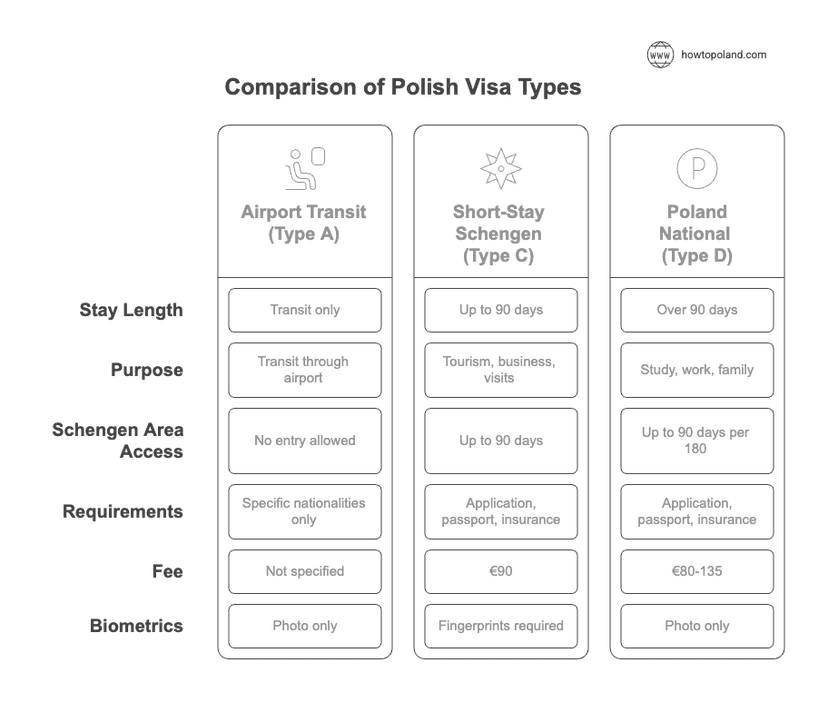
A student visa (Type D national visa) allows you to study legally at Polish universities and educational institutions. This visa is for foreign nationals who have been accepted to study programs in Poland, including full-time university studies, language courses, and research programs. Check our cost of living calculator to plan your budget.
Student visas are typically issued for the duration of your academic year or study program and can lead to temporary residence permits. The visa allows you to study at the educational institution specified in your application and work part-time during your studies. Learn more about finding a job in Poland.
Poland offers various study programs in both Polish and English, with many universities ranking among Europe's top educational institutions. Popular student cities include Warsaw, Krakow, and Wroclaw. Student visa holders can also travel within the Schengen Area during their studies.
Poland student visa application guide
Poland's higher education system follows the Bologna Process, offering three levels of degrees: Bachelor's (3 years), Master's (2 years), and Doctoral studies. Many programs are available in English, making Poland an attractive destination for international students. Find out more about moving to Poland.
The academic year typically starts in October and ends in June, divided into two semesters. Application deadlines vary by university but generally fall between May and July for the October intake. Check our guide on finding accommodation and opening a bank account to prepare for your stay.
You must obtain university acceptance before applying for a student visa. For official information about studying in Poland, visit the Study in Poland website. After arrival, make sure to get a Polish phone number and set up internet connection.
Long-term visa for studies over 90 days
For intensive language programs
Official acceptance letter from a Polish university or educational institution.
Evidence of sufficient funds to cover tuition and living expenses (minimum 3000 PLN per month).
Proof of Polish or English language proficiency depending on the program.
Get connected with relocation specialists who help foreigners settle in Poland - from visa paperwork to finding an apartment.
Visa and paperwork support
Help with visa applications, PESEL registration, meldunek, and other Polish bureaucracy
Housing assistance
Find a foreigner-friendly apartment with English-speaking landlords and fair contracts
Local expertise
Specialists who know the city, the process, and the common pitfalls foreigners face
End-to-end support
From pre-arrival planning to settling in - one point of contact for your entire move
Before applying for a student visa, you must first be accepted by a Polish university. Each institution has its own admission requirements, but here are the common documents needed:
Student visa applications must be submitted at the Polish embassy, consulate, or visa application center in your country of residence. A personal appointment is required for document submission and biometric data collection.
Processing time typically takes 15-30 days, but can be longer during peak periods (June-September) or if additional documentation is required. We recommend applying at least 60 days before your planned study start date.
The Polish missions accept visa applications up to 6 months before the planned trip. The visa fee is €80 for adults. Children between 6-12 years pay €40, and children under 6 years are exempt from fees.
Yes, international students can work part-time (up to 20 hours per week) during the academic year and full-time during official holiday periods without needing an additional work permit.
You need to prove you have at least 3000 PLN per month for living expenses, plus tuition fees. This can be shown through bank statements, scholarships, or sponsor letters.
Not necessarily. Many universities offer programs in English. However, if your program is in Polish, you'll need to prove Polish language proficiency (usually B1/B2 level).
Yes, your spouse and minor children can apply for family reunion visas. You'll need to prove sufficient income to support them and provide appropriate accommodation.
Graduates from Polish universities can apply for a temporary residence permit to seek employment for up to 9 months after graduation. If you find a job, you can then apply for a work visa.
Explore our helpful resources to make your student life in Poland successful and comfortable.
Currency Exchange Rates Disclaimer: All USD and EUR amounts shown in parentheses are approximate conversions based on recent exchange rates (1 USD ≈ 4.00 PLN, 1 EUR ≈ 4.20 PLN) and are provided for reference only. Actual costs may vary depending on current exchange rates and payment methods.